

Digital Transformation Of Small Businesses: How Local Entrepreneurs Are Winning In The Online Economy

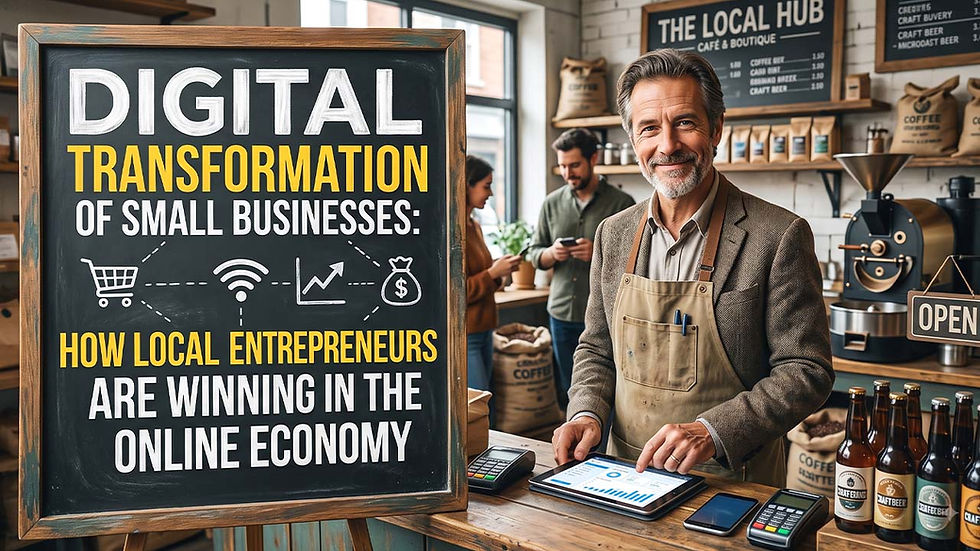
Intro: A New Era For Local Business
Across the world, from busy city centers to quieter regional towns, small businesses are navigating the biggest shift since the rise of mass retail: the move to a digital‑first economy.
Customers now search, compare and buy online before they ever step through a door, forcing entrepreneurs to rethink how they market, sell and deliver their products and services.
The Digital Shift In Consumer Behavior
Over the past decade, consumer journeys have moved from print ads and word‑of‑mouth to search engines, social media and review platforms. Many shoppers now discover local businesses via online search and mapping tools, then confirm their choice based on ratings, reviews and social proof.
This change has blurred the line between “online” and “offline.”
A restaurant, car wash or real estate agency may rely on in‑person service, but the decision to visit is often made on a smartphone screen long before a customer arrives.
Why Small Businesses Can’t Ignore Online Visibility
For small and medium‑sized enterprises, visibility has become a competitive advantage and a survival requirement. Companies that invest in basic digital foundations—such as a functional website, clear contact information and consistent profiles across platforms—are more likely to attract new customers and retain existing ones.
Online visibility is not only about being found; it is about being trusted.
Clear information, accurate opening hours, honest reviews and up‑to‑date content help build credibility in a crowded marketplace where customers can easily switch to a competitor.
Building A Professional Online Presence
The starting point for most businesses is a well‑structured website that loads quickly, works on mobile devices and clearly explains what the business offers. Even a simple site, when supported by basic search engine optimization and local listings, can significantly increase inbound inquiries from nearby customers.
Beyond the website, many entrepreneurs now use social platforms to share updates, promotions and behind‑the‑scenes stories. These channels help humanize the brand and give potential customers a sense of the people and values behind the business.
Content As A Long‑Term Asset
One of the most effective ways to compete online is to publish useful, educational content that answers real questions customers are asking. Articles, guides, and how‑to resources can appear in search results and continue to attract visitors long after they are published, making them a durable marketing asset.
For example, a business broker might publish articles explaining how to value a company, prepare a business for sale, or navigate legal steps. At the same time, a local service provider could share checklists, FAQs, and practical advice related to their field.
Over time, this type of content positions the business as a knowledgeable, trustworthy source in its niche.
Introducing Platforms Like DailyPressit
As entrepreneurs expand their digital footprint, many turn to specialized platforms and tools that make it easier to monitor news, trends, and online mentions across multiple channels.
Services like DailyPressit (available at DailyPressit) illustrate how media‑monitoring and online visibility solutions are becoming part of the modern small business toolkit.
By consolidating updates from press, web and social sources, such platforms help business owners stay informed about what is being said in their industry, region or niche.
This awareness allows them to respond more quickly to opportunities, potential issues and emerging topics that matter to their customers.
The Role Of Marketplaces And Aggregator Platforms
In many sectors, online marketplaces have emerged as a bridge between buyers and sellers, particularly for complex or high‑value transactions like business sales, real estate and automotive deals.
These platforms allow owners to list opportunities with structured information, photos and supporting documents, while buyers can filter options by industry, region, price and other criteria.
For business owners, appearing on a relevant marketplace can expand reach far beyond their immediate network.
Instead of relying solely on local contacts, they can connect with investors and entrepreneurs from other cities, or even other countries, who are actively searching for opportunities.
Local Services In A Digital World
Service‑based businesses such as car washes, repair shops and hospitality venues have also felt the impact of online discovery. Customers routinely check location, pricing, availability and reviews before committing, making accurate online information a key driver of foot traffic.
In competitive categories, even small details matter: photos of the premises, clear directions, transparent pricing and updated operating hours can influence whether a customer visits one establishment or another.
Businesses that respond to reviews and questions publicly can demonstrate responsiveness and care, further differentiating themselves from less engaged competitors.
Data‑Driven Decisions For Small Operators
Digital channels also give small businesses access to data that was previously available only to larger organizations. Website analytics, advertising dashboards and marketplace reporting tools can show which products attract interest, which locations generate the most leads and how marketing campaigns perform over time.
By reviewing this data, owners can make more informed decisions about pricing, staffing, inventory and promotional strategies. Rather than relying solely on intuition, they can test ideas, measure outcomes, and refine their approach using concrete evidence
Challenges On The Road To Digital Maturity
Despite the benefits, the transition to digital can be challenging.
Many owners must balance day‑to‑day operational demands with the time and cost required to set up and maintain websites, content and advertising campaigns.
Technical skills, budget constraints and rapidly changing platforms can create a steep learning curve.
Some businesses choose to outsource parts of the work—such as website development, copywriting or advertising management—while others invest in training and tools to build capabilities in‑house.
Practical Steps For Entrepreneurs
For business owners still in the early stages of digital transformation, a structured, step‑by‑step approach can make the process more manageable. Typical early moves include securing a relevant domain name, launching a simple but clear website, and claiming or updating profiles on major search and mapping platforms.
From there, entrepreneurs can gradually add elements like blog content, email newsletters, search advertising or participation in specialized marketplaces.
The key is to focus on actions that directly support business goals, such as generating leads, increasing bookings or shortening the time it takes to match buyers and sellers.
Looking Ahead: The Competitive Advantage Of Being Digital‑First
As customer expectations continue to evolve, businesses that treat digital channels as a core part of their strategy—not an afterthought—are better positioned for long‑term resilience.
Even in sectors that remain heavily offline, strong online visibility and clear communication can influence decisions at every stage of the customer journey.
Ultimately, digital transformation is less about adopting every new tool and more about building reliable systems that help real people find, evaluate, and choose the right businesses for their needs.
For many local entrepreneurs, that shift is already underway—and those who embrace it early are likely to enjoy a lasting competitive edge.


Comments